

TRANSFORMING MARKETING DATA INTO EXECUTIVE INSIGHTS
BLUE CROSS BLUE SHIELD OF MICHIGAN | HEALTHCARE | SOCIAL MEDIA ANALYST
OVERVIEW
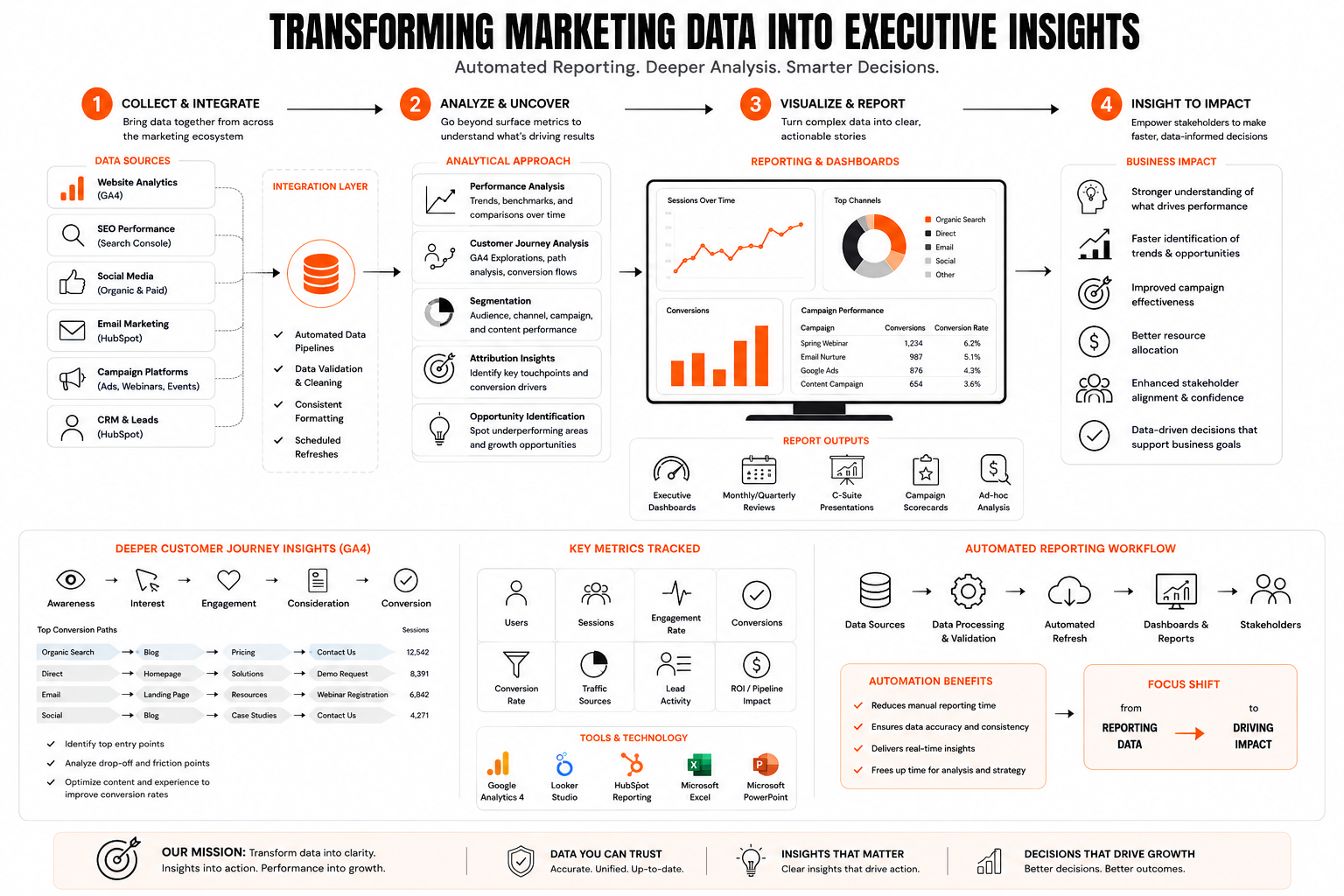
At Blue Cross Blue Shield of Michigan, marketing data existed across numerous platforms, including social media channels, website analytics tools, and SEO reporting systems. While this information provided valuable insight into campaign performance and audience behavior, it often required extensive manual effort to consolidate and interpret.
To address this challenge, I developed automated reporting processes and interactive dashboards that transformed large volumes of marketing data into clear, accessible insights. By leveraging Looker Studio, Google Analytics 4 (GA4), HubSpot, and Microsoft PowerPoint, I helped leadership teams better understand marketing performance, identify emerging opportunities, and make more informed strategic decisions.
THE CHALLENGE
Marketing leaders needed timely access to accurate performance information to evaluate campaign effectiveness and prioritize future initiatives. However, reporting processes were often fragmented across platforms, requiring manual compilation and limiting the ability to identify trends quickly.
In addition, standard performance metrics rarely explained why users behaved the way they did. Understanding how audiences navigated websites, interacted with content, and progressed through key conversion pathways required a deeper level of analysis.
The objective was to build scalable reporting frameworks that improved efficiency while uncovering meaningful insights capable of influencing business decisions.
GOAL
Improve decision-making across the marketing organization by developing automated reporting solutions and translating complex performance data into actionable insights for executive stakeholders.
MY APPROACH:
DEVELOPED AUTOMATED EXECUTIVE DASHBOARDS
Designed and maintained automated dashboards using Looker Studio that consolidated data from multiple sources into a single reporting environment.
Dashboards highlighted metrics including:
• Website traffic trends.
• Organic search performance.
• Campaign effectiveness.
• Social media engagement.
• Audience growth.
• Conversion activity.
• Content performance over time.
These reporting solutions reduced manual reporting requirements while ensuring stakeholders had access to near real-time performance visibility.
TRANSFORMED DATA INTO EXECUTIVE STORYTELLING
Translated analytical findings into executive-ready presentations using Microsoft PowerPoint, tailoring insights to different stakeholder groups.
Rather than simply reporting metrics, presentations focused on:
• Identifying emerging trends.
• Highlighting areas of opportunity.
• Explaining the drivers behind performance changes.
• Recommending actionable next steps.
This approach helped leadership teams understand not only what happened, but what actions should follow.
IMPROVED REPORTING EFFICIENCY THROUGH AUTOMATION
Developed repeatable reporting processes using Looker Studio, HubSpot, and Microsoft Excel to minimize manual data aggregation.
Automated reporting initiatives included:
• Executive performance dashboards.
• Campaign performance summaries.
• Lead generation reporting.
• Engagement trend monitoring.
• SEO performance tracking.
By reducing time spent compiling reports, stakeholders were able to focus more energy on strategic decision-making and optimization efforts.
UNCOVERED CUSTOMER JOURNEY INSIGHTS
Leveraged Google Analytics 4 Explorations, including Path Exploration reports, to better understand how users interacted with digital experiences.
Analyzed behaviors such as:
• Common navigation pathways.
• Entry points into the website.
• Content sequences associated with higher engagement.
• Exit points and areas of friction.
• User progression toward conversion events.
These analyses uncovered opportunities to improve content placement, strengthen calls-to-action, and refine user experiences across digital properties.
DEVELOPED REPORTING PROCESSES
Created reporting frameworks designed to serve both operational teams and executive audiences.
Reporting outputs included:
• Monthly and quarterly performance reviews.
• C-suite presentations.
• Campaign scorecards.
• Executive dashboards.
• Cross-channel marketing reports.
• Strategic recommendations informed by performance data.
These frameworks established greater consistency across reporting efforts and increased organizational confidence in marketing insights.
CHANGES MADE
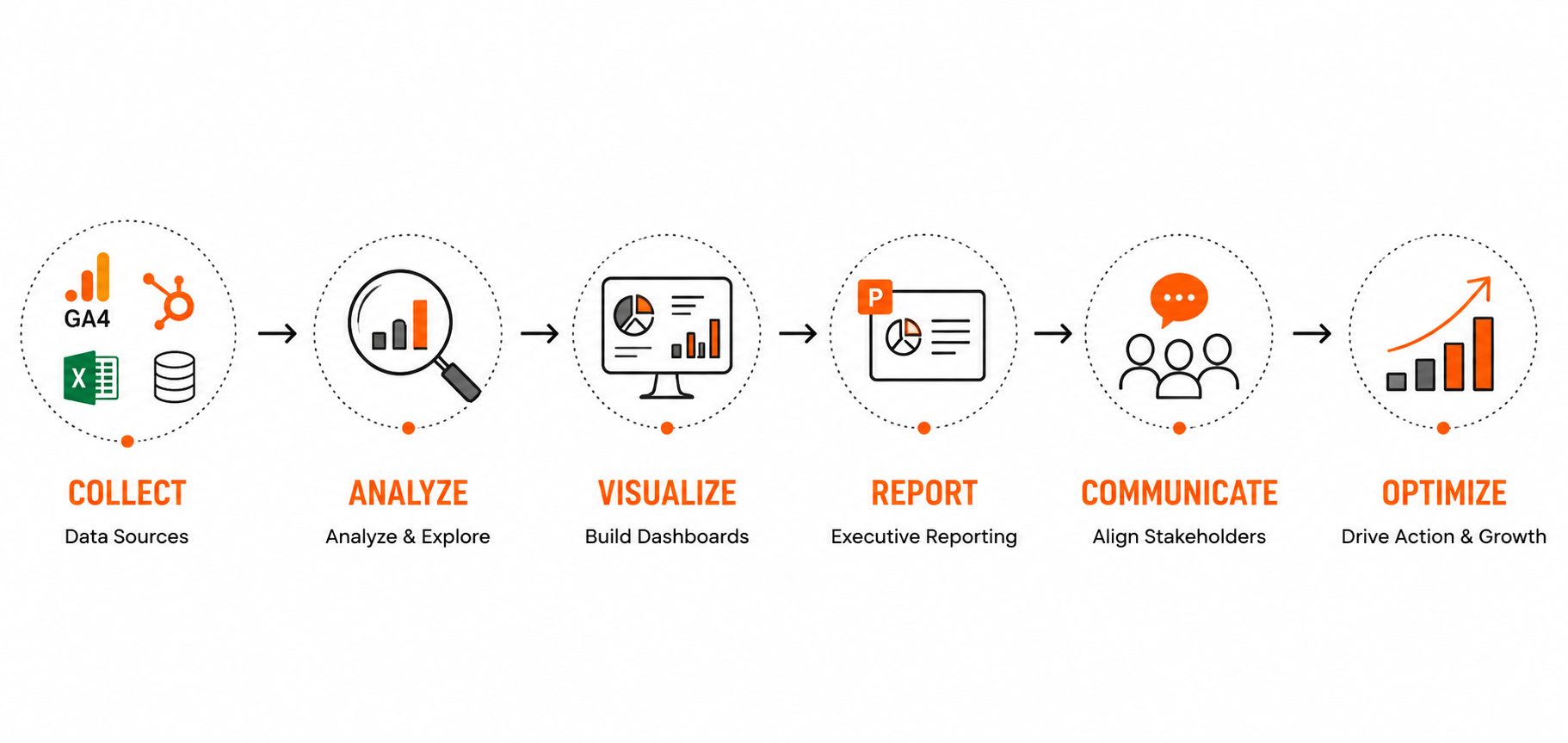
To improve visibility into marketing performance and reduce reporting inefficiencies, I implemented several enhancements across the analytics ecosystem.
Key initiatives included:
• Building automated dashboards in Looker Studio.
• Leveraging Google Analytics 4 Explorations to uncover behavioral insights.
• Creating executive presentations using Microsoft PowerPoint.
• Integrating data from multiple marketing platforms into unified reporting experiences.
• Developing reporting templates to standardize communication across teams.
• Identifying actionable opportunities through trend analysis and customer journey evaluations.
These efforts shifted reporting from a retrospective activity into a proactive decision-support function.
RESULTS:
The reporting initiatives implemented throughout this project strengthened the organization's ability to evaluate performance, identify opportunities, and act on emerging insights.
KEY OUTCOMES
• Reduced reliance on manual reporting processes through automated dashboard development.
• Increased visibility into marketing performance through executive-facing reporting frameworks.
• Improved stakeholder understanding of audience behavior through GA4 Path Exploration analysis.
• Enabled faster identification of trends and optimization opportunities.
• Supported data-informed decision-making across marketing initiatives.
• Enhanced communication between technical marketing teams and executive leadership through effective data storytelling.
WHAT I LEARNED
One of the most important lessons from this experience was that dashboards alone do not create value. The real impact comes from translating data into clear narratives that help stakeholders make better decisions.
By combining analytical rigor with thoughtful communication, marketers can bridge the gap between technical performance metrics and strategic business objectives. This project reinforced my belief that effective reporting is not simply about measuring outcomes, but empowering organizations to take meaningful action based on what the data reveals.
TOOLS USED
Looker Studio
Developed automated dashboards that consolidated marketing performance data into executive-friendly reporting experiences.
Google Analytics 4 (GA4)
Analyzed website performance and utilized Explorations to uncover customer journey insights.
GA4 Path Exploration
Identified common navigation patterns, conversion pathways, and areas of friction throughout the user experience.
HubSpot Reporting
Monitored campaign effectiveness, lead activity, and engagement trends to support marketing initiatives.
Microsoft PowerPoint
Translated analytical findings into executive presentations designed to inform strategic decisions.
Microsoft Excel
Performed supporting analyses, trend identification, and ad hoc reporting activities.