

DRIVING 140% ORGANIC TRAFFIC GROWTH THROUGH STRATEGIC SEO
BLUE CROSS BLUE SHIELD OF MICHIGAN | HEALTHCARE | Digital Marketing ANALYST
OVERVIEW
At Blue Cross Blue Shield of Michigan, I supported enterprise SEO initiatives designed to increase organic visibility and improve the discoverability of health education content. Working across two large healthcare websites containing more than 10,000 pages and serving over 100,000 monthly visitors, I collaborated with content creators, subject matter experts, and marketing stakeholders to develop data-informed strategies that strengthened search performance.
Through ongoing analysis, content optimization, and technical SEO support, these efforts contributed to a 140% increase in organic traffic from Google Search, while helping nearly 100 articles rank on Page 1 of Google search results.
THE CHALLENGE
Healthcare consumers rely heavily on search engines to answer complex questions about coverage, wellness, preventive care, and medical conditions. However, the healthcare search landscape is highly competitive, with health systems, publishers, government organizations, and insurance providers competing for the same audiences.
Many existing content assets had opportunities for improvement related to keyword targeting, search intent alignment, internal linking, metadata optimization, and ongoing performance monitoring. Additionally, with thousands of pages spread across multiple web properties, identifying which opportunities would deliver the greatest impact required a disciplined, data-driven approach.
The objective was not simply to increase website traffic, but to attract qualified users seeking trustworthy health information and encourage deeper engagement with BCBSM's digital ecosystem.
The Goal
Increase organic search visibility and qualified website traffic by 25% through data-driven SEO strategies and the optimization of high-value healthcare content.
IDENTIFIED HIGH-IMPACT OPPORTUNITIES
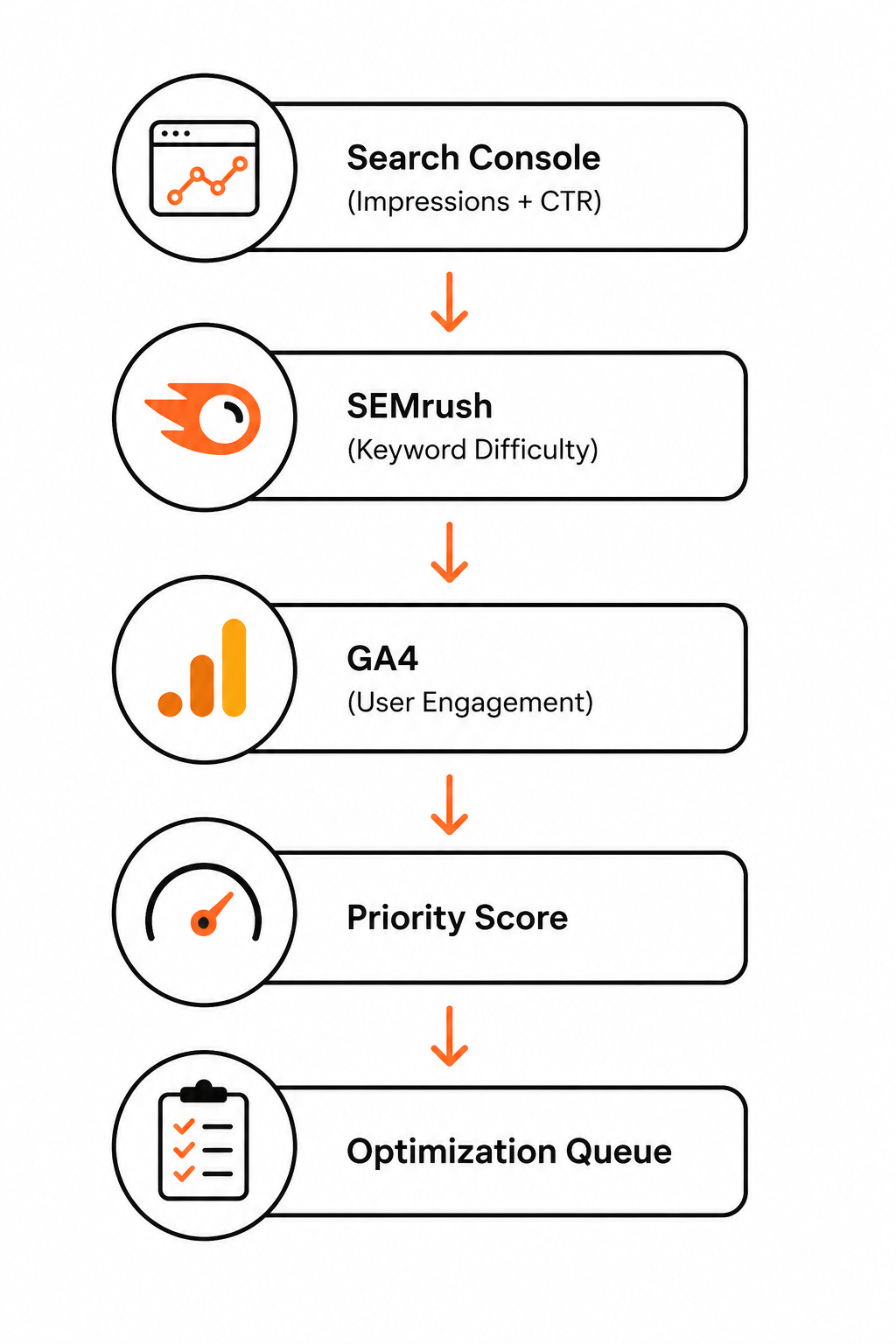
Leveraged Google Search Console, SEMrush, and Google Analytics 4 (GA4) to identify content assets with strong impression volume but lower-than-expected click-through rates, pages ranking on the bottom of Page 1 or top of Page 2, and topics demonstrating increasing search demand.
Prioritized optimization efforts using metrics such as:
Organic impressions and click-through rate (CTR)
Average keyword position
Existing traffic volume
Search intent alignment
Historical engagement metrics within GA4
Competitive keyword difficulty identified through SEMrush
This process ensured resources were focused on initiatives with the highest potential return.
MY APPROACH:
OPTIMIZED CONTENT FOR SEARCH INTENT
Partnered with content teams to enhance both new and existing articles using SEO best practices.
Optimization initiatives included:
Refining primary and secondary keyword targeting.
Updating page titles and meta descriptions to improve CTR.
Strengthening on-page content structures using descriptive headings.
Expanding content to better address user questions and intent.
Improving readability and content organization.
Implementing internal linking strategies to strengthen topic authority.
These efforts helped ensure that content was not only discoverable by search engines but genuinely useful for users seeking health-related information.
MONITORED PERFORMANCE AND UNCOVERED INSIGHTS
Developed recurring reporting processes using Google Analytics 4, Google Search Console, and Microsoft Excel to evaluate how optimization efforts influenced user behavior.
Key metrics monitored included:
Organic sessions
Search impressions
Click-through rates
Average keyword rankings
Engagement rates
Pages per session
Scroll depth and content interaction patterns
Through this analysis, I identified that articles addressing timely health concerns, preventive care topics, and practical wellness guidance consistently outperformed broader educational content.
These insights informed future editorial recommendations and content prioritization decisions.
COLLABORATED ACROSS TEAMS
Worked closely with writers, editors, marketing stakeholders, and healthcare subject matter experts to ensure optimization recommendations aligned with organizational priorities and regulatory standards.
Recommendations were translated into actionable guidance that balanced:
SEO best practices
Brand voice requirements
Health literacy considerations
Accuracy and compliance expectations
User experience objectives
This collaborative approach enabled sustainable improvements without compromising content quality.
DEVELOPED REPORTING PROCESSES
Created dashboards and reporting frameworks that translated complex SEO metrics into accessible insights for stakeholders.
Using Google Analytics 4, Google Search Console, SEMrush, and Microsoft Excel, I consolidated data into recurring reports highlighting:
Month-over-month organic growth trends.
Top-performing content categories.
Emerging keyword opportunities.
Articles experiencing ranking improvements.
Traffic contributions by content initiative.
Areas requiring additional optimization support.
These reporting processes improved visibility into SEO performance and supported more informed decision-making across the marketing organization.
CHANGES MADE
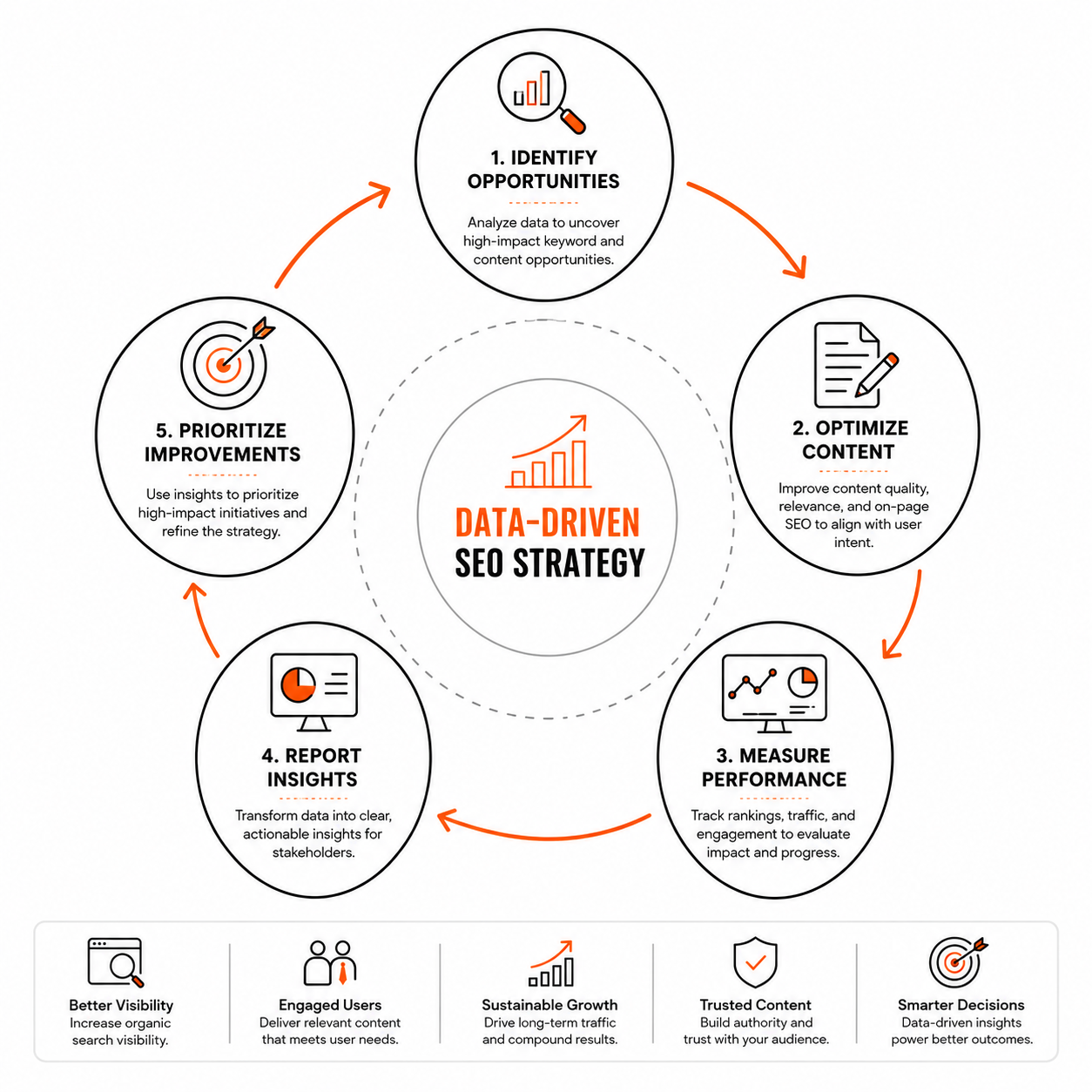
To strengthen BCBSM's organic search performance, I implemented and supported a variety of optimization initiatives designed to improve content discoverability and increase engagement from qualified users.
Key initiatives included:
Conducting keyword research using SEMrush to identify high-value opportunities.
Optimizing existing content based on insights from Google Search Console.
Improving metadata and title tag performance to increase click-through rates.
Enhancing internal linking structures to support topic authority.
Monitoring performance trends through Google Analytics 4 reporting.
Prioritizing updates to high-potential content assets already generating search visibility.
Developing recommendations informed by user engagement data and search behavior patterns.
These initiatives established a repeatable framework for identifying opportunities and continuously improving performance.
RESULTS:
The combined impact of these efforts contributed to meaningful improvements in BCBSM's organic search visibility and user engagement.
KEY OUTCOMES
Increased organic traffic by 140% through Google Search.
Helped nearly 100 articles achieve Page 1 rankings on Google.
Supported SEO efforts across websites containing 10,000+ pages.
Contributed to improving the experience of 100,000+ monthly website visitors.
Established repeatable reporting processes that increased visibility into SEO performance.
Enabled stakeholders to prioritize optimization initiatives using objective performance data.
Beyond the performance gains themselves, these efforts demonstrated how combining analytical rigor with strategic content optimization can create measurable business impact over time.
TOOLS USED
Google Analytics 4 (GA4)
Analyzed user engagement patterns, content performance, and organic traffic trends.
Google Search Console
Monitored keyword rankings, impressions, click-through rates, and search opportunities.
SEMrush
Conducted keyword research, competitive analysis, and content opportunity identification.
Microsoft Excel
Built reports, analyzed trends, and synthesized large datasets into actionable insights.
Google Sheets
Collaborated with stakeholders and organized optimization initiatives.
WordPress
Supported implementation of content updates and on-page optimization recommendations.
WHAT I LEARNED
One of the biggest takeaways from this experience was that effective SEO extends far beyond keyword rankings. Sustainable growth comes from understanding user intent, continuously evaluating performance data, and adapting content strategies based on evolving audience needs.
This project reinforced my belief that successful digital marketing requires balancing creativity with analytical thinking. By pairing strong storytelling with disciplined measurement, organizations can build experiences that both serve their audiences and achieve meaningful business outcomes.